Light is not merely a functional necessity; it is a fundamental architectural element that shapes our experience of space. In minimalist design, where ornamentation is stripped away, light becomes the primary decorator, painting surfaces with shifting shadows and enhancing the tactile quality of materials.
The Circadian Rhythm of Architecture
Modern residential design increasingly prioritizes natural illumination, not just for energy efficiency but for human health. Studies show that exposure to natural light cycles regulates our circadian rhythms, improving sleep quality and mood. By strategically placing apertures—skylights, clerestories, and floor-to-ceiling windows—we can choreograph the movement of the sun throughout the home, creating spaces that feel alive and responsive to the time of day.
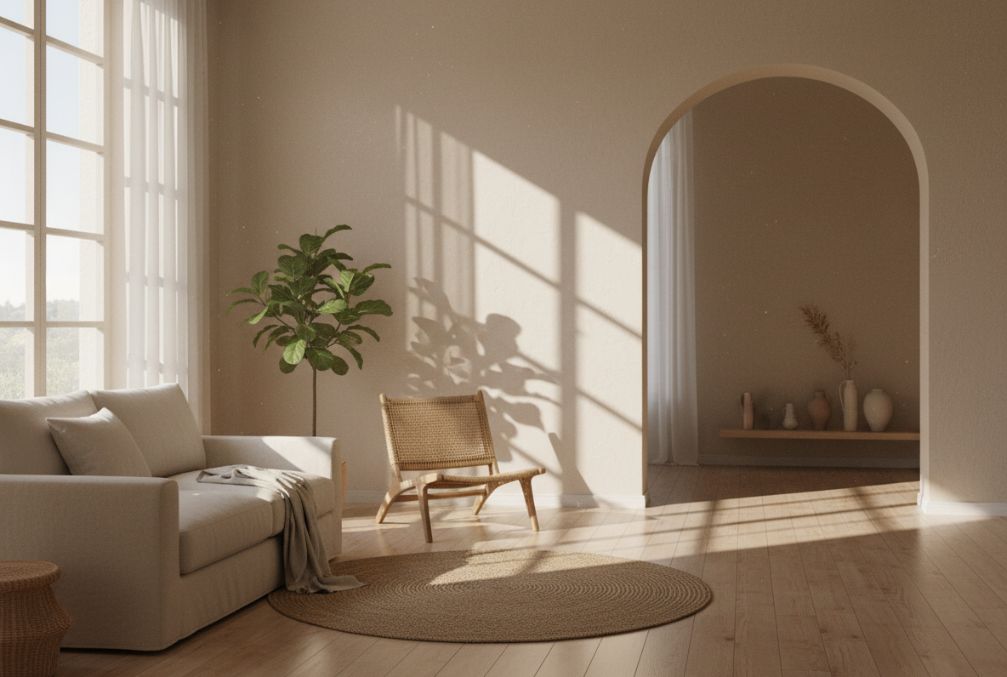
The play of light and shadow in the morning.
Shadow as Substance
In our recent projects, we have been exploring the concept of 'shadow as substance'. Rather than flooding a room with uniform brightness, we allow for pockets of shadow that create depth and mystery. This interplay creates a sense of sanctuary, a retreat from the over-stimulated outside world.